Why a Well-Trained Family Dog Matters (Especially With Kids)
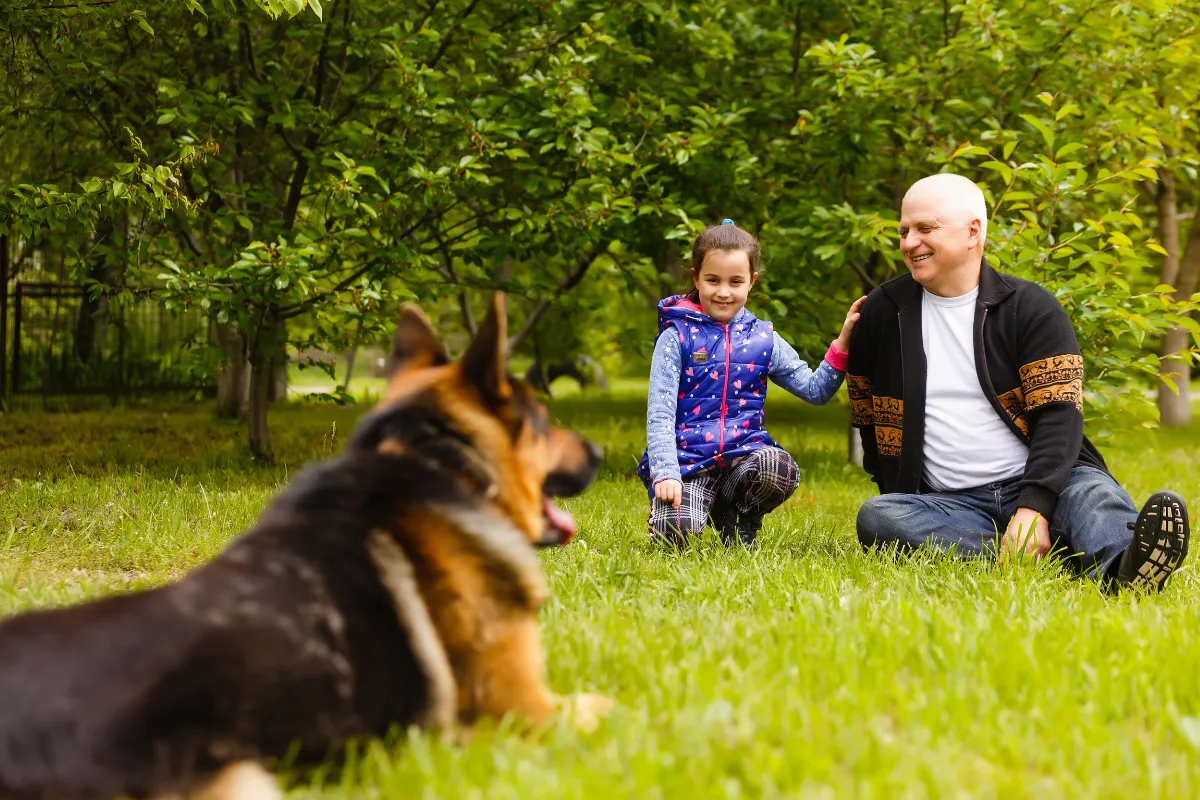
A well-trained family dog isn’t about showing off commands. It’s about safety, predictability, and trust—especially in a home with kids. Training creates clear rules your dog can follow even when life is loud, busy, and distracting.
If you’re in Tacoma, Seattle, Olympia, Puyallup, or Renton, this is the standard we aim for: a dog that can live calmly in a family home, handle visitors, and stay safe around children.
The Quick Answer
A well-trained dog is safer and easier to live with because training builds:
Impulse control (not jumping, grabbing, or rushing)
Reliable recall (coming when called)
Calm behavior in the home (settling, respecting space)
Clear communication between dog and family
Why Training Matters More When Kids Are Involved
Kids move fast, make noise, drop food, hug awkwardly, and don’t always read a dog’s body language. Even a friendly dog can make a bad decision in a split second.
Training reduces risk by giving you tools to:
Stop jumping and mouthing
Prevent door-dashing
Manage excitement around play
Create safe boundaries during meals and chaos
The Most Important Safety Skills for a Family Dog
These aren’t fancy. They’re life-changing:
Place/bed: go to a spot and stay there
Leave it: disengage from food, toys, or kid items
Drop it: release objects safely
Recall: come immediately, even with distractions
Loose leash walking: no dragging adults or kids
Settle: calm down after excitement
Training isn’t just for the Dog—it’s for the Household
A well-trained dog comes from a well-trained system:
Consistent rules (what’s allowed, what’s not)
Adult supervision with kids and dogs
Management tools (gates, crates, leashes) when needed
Teaching kids how to interact safely
Training and management work together.

Myths vs. Facts
Myth: My dog is good with kids, so we don’t need training.
Fact: Training is what keeps good with kids consistent when things get chaotic.
Myth: Training is only for problem dogs.
Fact: Training is prevention. It keeps small issues from becoming big ones.
Myth: Kids should learn to deal with the dog.
Fact: Adults must set the rules. Kids learn best when the dog is predictable.
FAQ: Quick Answers
What age should kids start helping with training?
Kids can help with simple routines (like tossing treats to a dog on place) when supervised. Adults should handle leash work and higher-risk situations.
Can training fix everything?
Training helps a lot, but it’s not magic. Some dogs need behavior modification, and every home needs management and supervision.
What’s the #1 rule with kids and dogs?
No unsupervised interaction. Even the best dogs can make mistakes.
Book an Evaluation
If you want a calmer, safer family dog, start with an evaluation. We’ll assess your dog’s behavior, your household routines, and your goals—then build a plan that works in real life, not just in a training session.