How to Build a Calm Family Dog: Routine, Boundaries, and the Off Switch
Most families do not need a “high-drive” dog. They need a dog that can settle in the house, make good choices around kids, and handle real life without constant correction.
A calm family dog is built through a mix of training and lifestyle structure because calm is not just a personality trait; it is a skill.
The Quick Answer
To build a calm, well-trained family dog, focus on:
• Routine, with predictable outlets
• Boundaries, with clear rules at home
• An off switch, using place and settle training
• Management, until behavior is reliable
Calm Starts With Meeting Needs the Right Way
A lot of “bad behavior” is just unmet needs. Dogs need the right balance of:
• Physical exercise, based on age and ability
• Mental work, such as training, scent games, and problem solving
• Rest, because many dogs are overtired and overstimulated
The goal is not to exhaust your dog. The goal is to create a dog that can work, then recover.
The Family-Dog Routine That Works
Here is a simple structure most homes can follow:
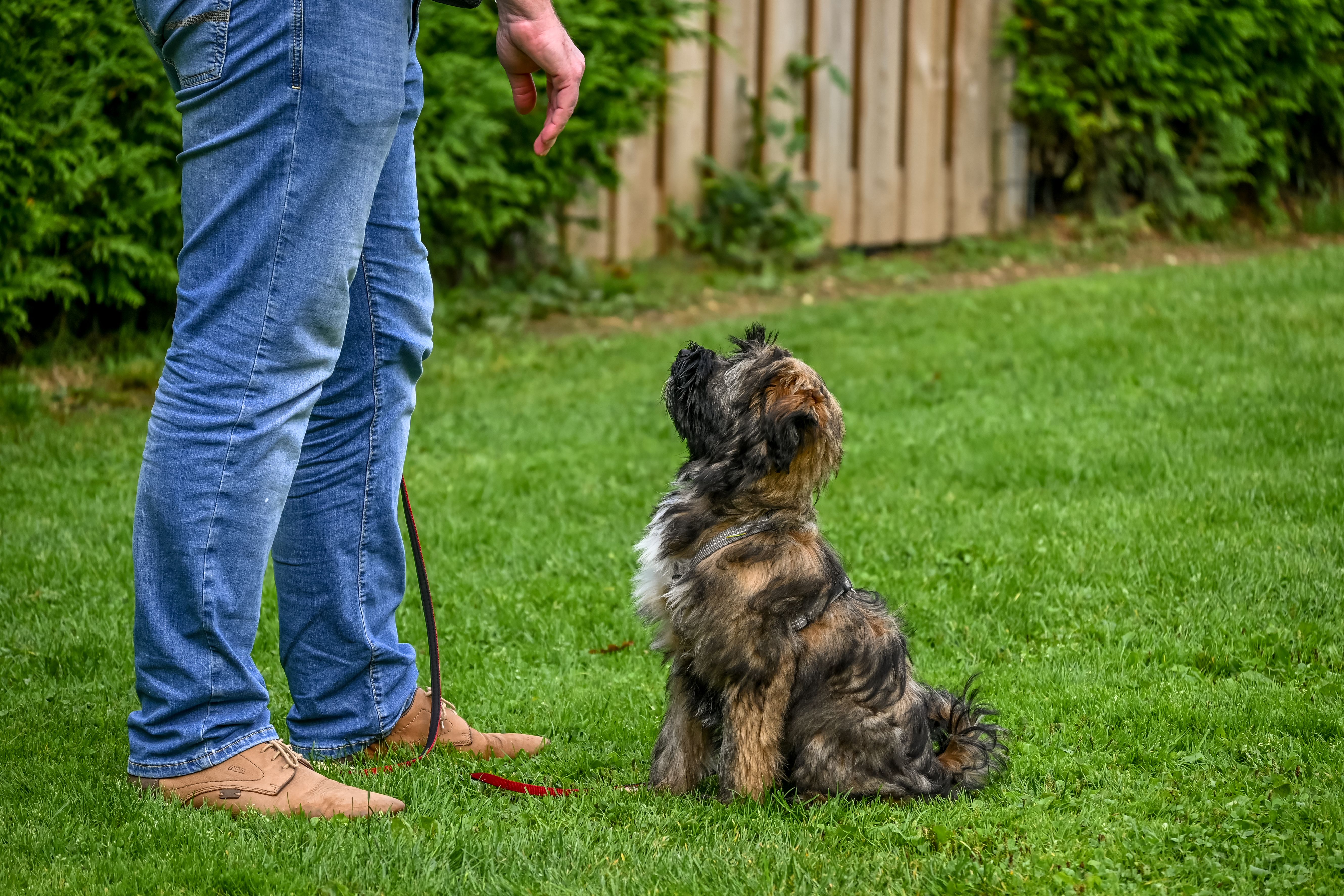
Morning: Potty, short walk, and 5 minutes of obedience
Midday: Enrichment, such as a food puzzle, sniff session, or short training session
Evening: Walk, play, and structured calm time on place
Night: Settle routine at the same time and in the same spot
Consistency beats intensity.
Boundaries That Make Dogs Feel Secure
Dogs do better when rules are clear. Helpful boundaries include:
• No door rushing, using sit and stay before doors open
• No jumping for attention, because attention happens when calm
• No free access to chaos, using gates or a crate when needed
• Structured greetings, such as place when guests arrive
Boundaries reduce conflict and prevent dogs from rehearsing bad habits.
Teaching the Off Switch: Place and Settle
If you only teach “go-go-go,” you will get a dog that lives in high gear. A strong “place” behavior means:
• Your dog goes to a bed or mat
• Your dog stays there until released
• Your dog learns to relax while life happens, including kids playing, dinner, and visitors
This is one of the biggest quality-of-life skills for families.
Why This Matters With Kids
Kids create unpredictable movement and noise. A dog without an off switch may:
• Chase running kids
• Mouth hands during play
• Jump and knock kids over
• Guard toys or space when overstimulated
A dog that can go to place and settle is safer and easier for kids to live with.
FAQ: Quick Answers
Is a calm dog the same as a tired dog?
No. A tired dog can still be chaotic. Calm is the ability to self-regulate.
Do I need a crate?
Not always, but crates and gates are powerful management tools, especially with young kids.
What is the fastest way to get calm?
Stop rewarding chaos, reinforce calm, and build a daily routine your dog can predict.
Book an Evaluation
If your home feels chaotic, start with an evaluation. We will look at your dog’s behavior, your household routine, and your kid-dog setup, then build a plan for a calmer, safer family dog.